
 Vendon Cloud
 Use Cases
 Closed loop
 Engine systems
 Card readers
 Loyalty apps
 Cash systems
 About Coges
 Contacts
By Daniele Ioriatti, Head of Sales, Coges
If you want to understand how Europe is changing, spend less time reading predictions and more time looking at what comes out of a vending machine. The choices people make in workplaces, train stations, universities, and factories reveal shifts that often go unnoticed until they reshape the entire sector.
Across Europe, those shifts are now unmistakable. The vending market is not collapsing, nor exploding — it is splitting. Consumption patterns are no longer spread evenly across the traditional mid-range. Instead, demand is pooling at the two ends of the spectrum: quality-focused premium sites and cost-conscious value sites.
This is not a theory. It is visible in the market data, in operator conversations, and in the daily flows of transactions running through Coges payment systems and Vendon Cloud.
A sector holding steady — but only on the surface
The latest EVA figures show that total vends across Europe grew only 0.6% between 2023 and 2024, with volumes still far below pre-pandemic levels *. Price increases have helped stabilize revenue, but underlying consumption has flattened. At first glance, this suggests a static market. In reality, it marks the early stage of a deeper transformation.
When the report is read carefully, a pattern emerges: growth is coming from two very different types of locations, and they demand different strategies from operators.
Premium environments — corporate offices, transit hubs, healthcare — continue to lean towards higher-quality beverages, especially bean-to-cup, which now represents 74% of Europe’s hot beverage fieldbase *. At the same time, value-driven OCS sites are expanding quickly; OCS machine numbers rose 2.6% in one year, while traditional vending hot drink machines declined *.
The middle — sites that are neither exceptional nor cost-efficient — is what’s slowly eroding.
The premium rise: when expectations increase, compromise disappears
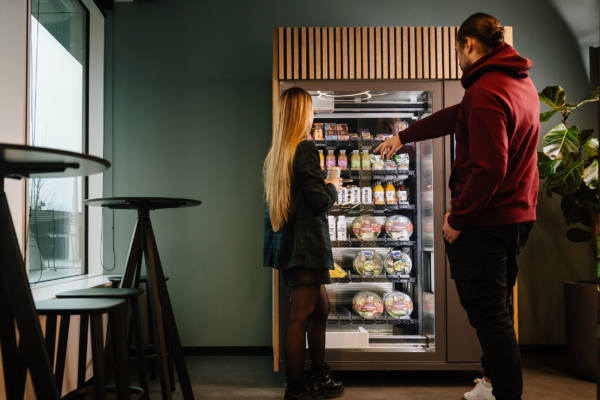
Premium locations are not necessarily luxurious, but they do share one common trait: customers expect a frictionless experience. Europe’s workplace culture is shifting, and vending machines are expected to behave more like well-managed coffee counters. A machine cannot be out of order at 9:00 in the morning. A payment method cannot fail. A subpar drink should not appear twice.
This rise in expectations aligns with the industry’s investment in bean-to-cup. The fieldbase evolution shows a steady expansion of semi-automatic table-top machines in OCS, now accounting for the largest share of hot beverage placements across Europe *. Operators upgrading to these machines quickly discover that the hardware alone isn’t enough — quality control requires visibility.
Payment data plays a bigger role here than many realize. When Coges cashless systems are connected to Vendon Cloud, operators can follow consumption curve changes and detect even subtle shifts. A drop in transactions at peak hours is often the first sign of a performance issue: a grinder slightly off calibration, a cleaning cycle missed, a payment reader underperforming. The machine’s technical data confirms the story, but payment data reveals it first.
In premium locations, excellence is not a marketing position — it is a measurable operational outcome.

The value expansion: reliability over sophistication
At the opposite end, Europe’s value segment is strengthening. The OCS fieldbase continues to expand while free-standing vending machines contract *. This aligns with what operators see in factories, warehouses, and logistics centres: steady daily consumption, stable routines, and a preference for clear, predictable pricing.
These are locations where the operator’s profit depends on operational precision more than on product experimentation. A refill made one day too early or one day too late can erase the margin of a site for the week. An unnecessary service visit is not a minor inconvenience — it is an expense with immediate consequences.
This is why integrated payment and telemetry systems are now at the centre of value-driven operations. When Coges readers, MyKey closed-loop systems and cash modules feed data directly into Vendon Cloud, operators gain the one advantage that matters most in value sites: timing. They know when sales slow down, when patterns break, when the next refill is truly needed.
In these environments, the smartest operator is not the one with the most advanced equipment, but the one with the most accurate picture.
The disappearing middle: a slow shift that changes everything
The report highlights a stable overall machine fieldbase in Europe — but stability is deceptive. Free-standing hot drink machines have been declining for years, and both instant and freshbrew formats are shrinking as bean-to-cup grows *. Mid-tier environments — those relying on average consumption, average pricing, and average expectations — are precisely where these machines are concentrated.
What’s disappearing is not a machine category, but a business model. Locations with neither strong footfall nor cost efficiency are becoming harder to justify. Operators must choose whether to enhance these sites or simplify them; remaining in-between is rarely viable.
Here again, payment data is the decisive indicator. An operator can see in real time if a price increase is tolerated, if a product swap changes buying behaviour, or if visitation frequency is declining. The answer to “Is this site worth keeping?” doesn’t come from intuition; it comes from the machines themselves.
A unified ecosystem — the next strategic advantage
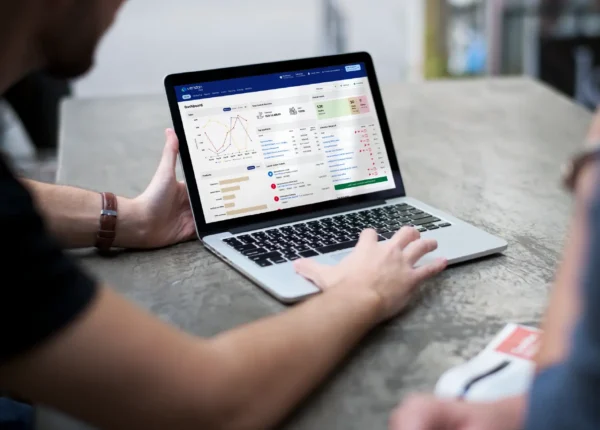
What these trends have in common is the growing importance of connected systems. The days when operators managed payment devices separately from telemetry, route planning, or machine performance are ending. The industry is moving toward one integrated operational stack.
Coges already sees this shift daily. Whether an operator installs a MyKey system, a contactless bank card reader, or a full cash module, the true value appears when those components operate as part of a single ecosystem inside Vendon Cloud. When payment, technical, and consumption data align, inefficiencies surface immediately, and decisions become faster and clearer.
In a market splitting between premium and value, this unified view is no longer helpful — it is essential.
A sector in transition needs clearer signals
The vending industry is not facing decline; it is facing definition. Consumption is stabilizing, expectations are polarizing, and the gap between efficient operators and struggling operators is widening. The companies that thrive will be the ones who read the signals early — not from reports, but from the data generated by the machines they manage.
Premium sites will reward operators who uphold quality consistently.
Value sites will reward operators who run leaner, smarter operations.
The middle will reward no one.
In both directions, the same principle applies: connected payments and telemetry give operators the clearest possible view of reality.
Machines don’t speculate. They document. And for an industry in transition, that is the most reliable compass we have.
* EVA Report 2024