
 Vendon Cloud
 Use Cases
 Closed loop
 Engine systems
 Card readers
 Loyalty apps
 Cash systems
 About Coges
 Contacts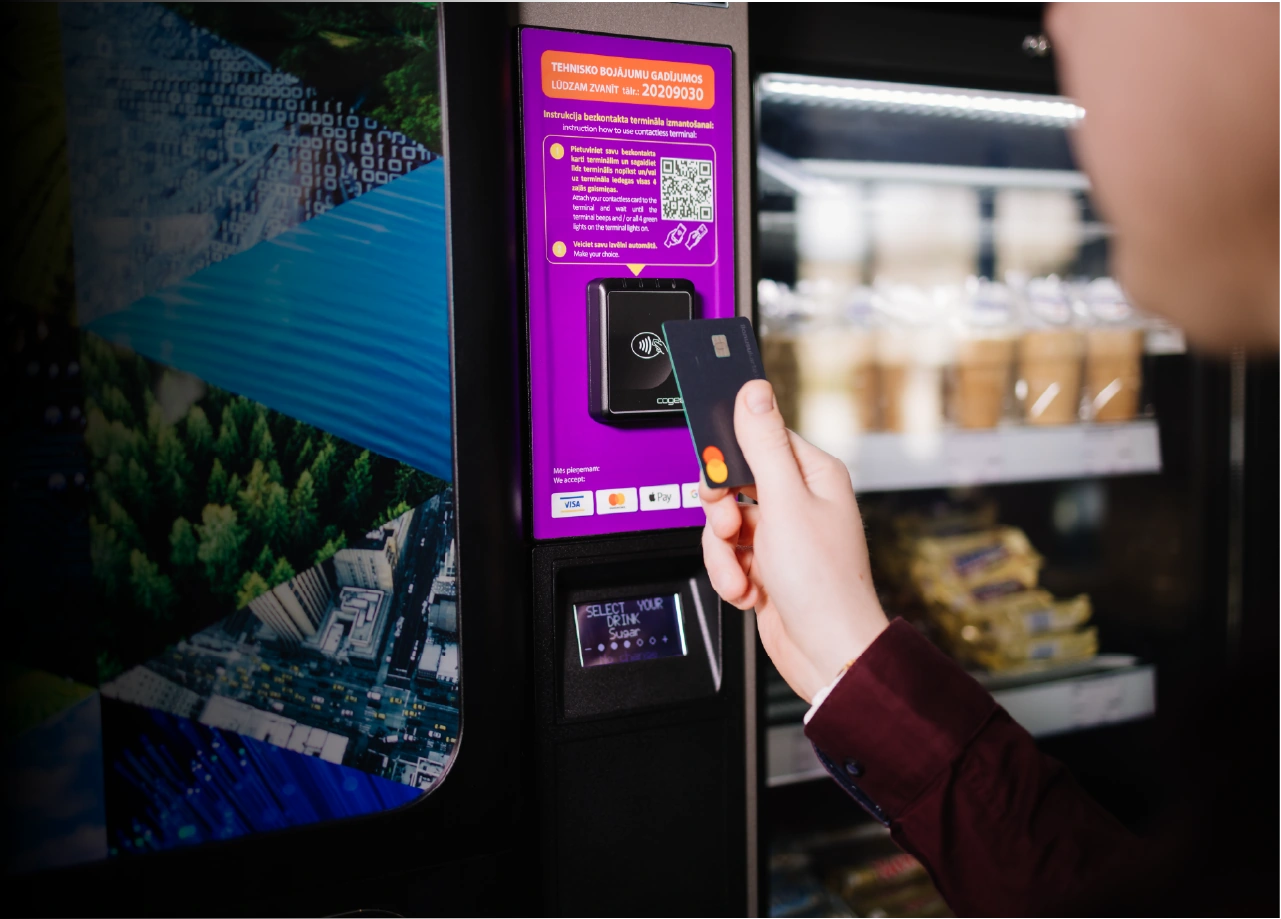
Most vending operators review payment data inside their vending payment systems to check performance.
Revenue, transaction count, payment share. It’s part of the routine.
But payment data does more than confirm how much you sold. It reveals how your customers behave.
Behind every transaction — whether through a card reader, cash system, or closed-loop payment system — is a decision. Payment method, average transaction, and frequency all reflect how comfortable customers feel spending in that specific environment. When you read those signals correctly, you start understanding not just what is happening — but why.
You don’t need complex analytics. Even standard payment monitoring across card and cashless vending transactions already tells a story. You just need to look at it differently.
Card vs cash: a signal of spending comfort
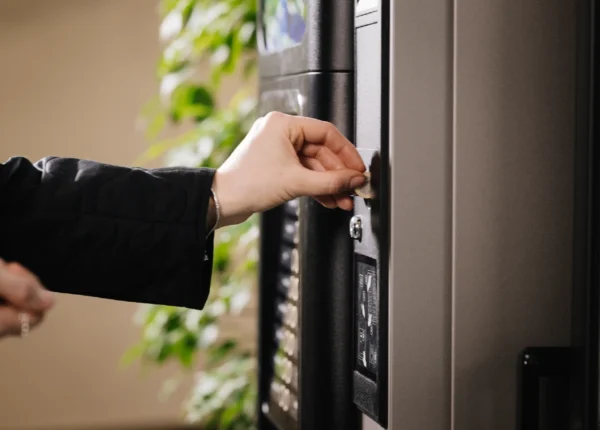
Cash feels tangible. Card feels lighter. That difference affects behavior.
In most locations, card transactions processed through a vending card reader show a slightly higher average than cash. That’s normal. Reduced friction in cashless vending encourages slightly higher spend. But the important insight isn’t that card is higher — it’s how the difference evolves over time.
If the gap between card and cash begins to shrink, customers may be tightening their spending. They’re still buying, but they are controlling transaction value more carefully. If the gap widens, spending comfort may be increasing.
This matters because customers rarely stop buying immediately when prices rise. First, they reduce how much they spend per visit. Only later does transaction count decline.
Monitoring card and cash averages separately inside your payment system helps you detect that shift early. It allows you to adjust pricing before frequency suffers.
Margin expansion should follow comfort — not force it.
High and low locations require different logic
Not every location responds to pricing the same way.
High-traffic environments — airports, hospitals, transport hubs — are situational. Customers are passing through. They prioritize speed and convenience. Price comparison is secondary.
Low-traffic environments — campuses, offices, factories — are habitual. Customers return daily. They remember prices. Small changes are noticed.
Payment data collected through integrated vending payment and telemetry systems often reflects this difference. High-flow locations tend to support slightly higher and more elastic averages. Recurring locations often show stable, tightly clustered averages over time.
Applying one pricing model across both types limits performance. In high-traffic sites, you may underuse margin potential. In recurring sites, you may damage frequency by pushing too hard.
When you classify locations by behavior rather than category, pricing becomes more precise.
Closed-loop is not about transaction size — it’s about stability
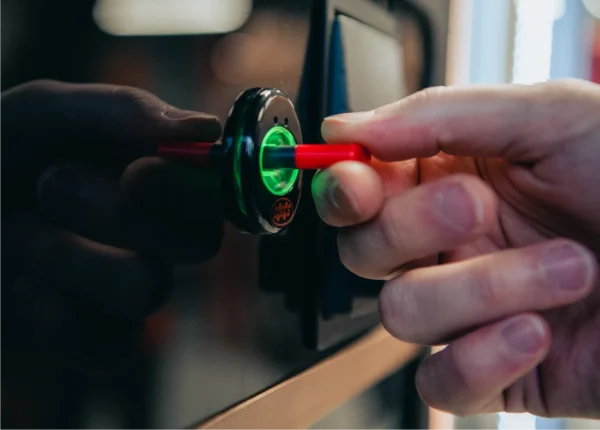
Closed-loop payment systems often show lower average transaction values. That can look unremarkable if you focus only on transaction size.
But closed-loop frequently represents routine consumption: daily coffee, staff purchases, prepaid balances, or employee badge payments. It’s predictable. And predictability reduces volatility.
The mistake many operators make is trying to increase margin everywhere equally. If you disrupt routine segments inside your closed-loop vending system with aggressive price changes, you risk weakening the most stable part of your revenue base.
Closed-loop often anchors frequency. Card payments — especially contactless — often carry more elasticity.
Understanding this balance helps you grow margin without destabilizing volume.
ⓘ Read later: Why experienced vending operators still trust closed-loop
Average transaction reveals the spending ceiling
Over time, most locations settle into a consistent average transaction range. That range is rarely accidental. It often reflects the economic comfort zone of that audience.
If card average has remained stable within a narrow band for months, that may represent the natural ceiling of that environment. Pushing far beyond it typically reduces frequency rather than increasing profit.
On the other hand, locations with higher and more variable averages — often supported by frictionless card payment systems — may support gradual price testing.
The goal isn’t to force growth everywhere. It’s to recognize where elasticity exists — and where stability matters more.
So when should you change prices — and when shouldn’t you?
Payment data from your vending payment system helps you see sensitivity. But it should also guide action.
Price changes should never be automatic. They should follow behavioral signals.
Consider increasing prices when:
- Card average transaction value is stable or gradually increasing.
- The gap between card and cash is widening.
- Transaction count remains consistent after small past adjustments.
- The location shows higher elasticity (typically high-traffic environments).
These signals suggest spending comfort. In these environments, small and gradual increases are often absorbed without damaging frequency.
Margin growth is more sustainable when behavior supports it.
Be cautious with price increases when:
- Card and cash averages are converging.
- Average transaction value declines after small adjustments.
- Payment mix shifts toward more controlled methods (cash or closed-loop payments).
- The location shows tight, stable spending patterns over time.
These signals indicate sensitivity. In such environments, pushing pricing may reduce frequency faster than it increases margin.
Here, growth should come from product mix optimization, operational efficiency, improved cash management, or targeted assortment adjustments — not broad price pressure.
The key principle: let behavior guide pricing
Price should follow behavior.
Your vending payment data — whether from card readers, cash systems, or closed-loop infrastructure — already shows how customers respond to price and convenience. The advantage comes from reading those signals — and acting before revenue forces you to.
Operators who combine payment insight with connected operations and real-time payment monitoring often see the difference not only in margin control, but in overall performance — as demonstrated in the Broderick’s case study on building a virtually cashless, fully connected estate.