
 Vendon Cloud
 Use Cases
 Closed loop
 Engine systems
 Card readers
 Loyalty apps
 Cash systems
 About Coges
 Contacts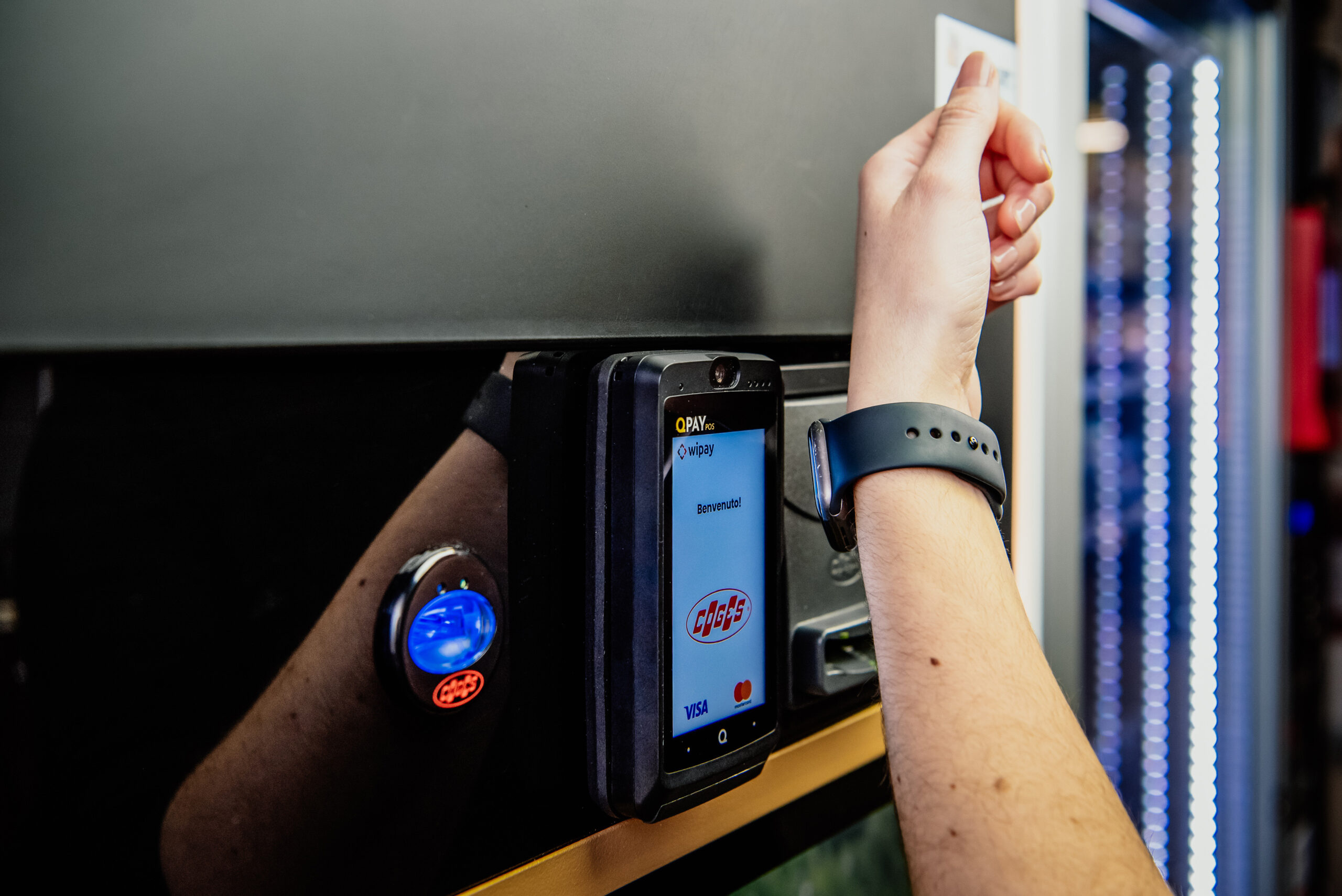
Cashless payment is no longer optional in vending. But choosing a payment terminal is not just about accepting cards — it’s about how the solution fits into your machine setup, your connectivity, and your operating costs.
With the QPay5000, Coges offers two versions: MDB and Serial.
Both accept payments in the same way. The real difference is how the system is built behind the scenes — and what that means for you as an operator.
Same customer experience, different system logic
From the consumer’s point of view, nothing changes:
- Tap card or phone
- Payment is approved
- Product is dispensed
But behind that simple interaction, the architecture is different — and that directly affects installation, cost, and maintenance.
MDB: simple to install, but system remains split
The QPay5000 MDB connects directly to the vending machine using the standard MDB protocol.
That gives you:
- Fast installation
- Compatibility with most machines
- No need for custom integration
However, MDB only covers payment at the machine level.
If you want:
- Sales data
- Remote monitoring
- Vendon Cloud access
You still need Coges Engine as a separate component.
Serial: one connected system, one sim
The QPay5000 Serial was designed to simplify this architecture.
It still works with Coges Engine, but the key difference is how connectivity is handled:
A single SIM card inside the QPay5000 Serial manages:
- Payment transactions
- Communication with Engine
What this changes
Instead of splitting responsibilities across devices, you consolidate them:
- One communication channel
- Fewer hardware components
- One SIM instead of multiple
The system becomes more integrated
Why this matters for your business
-
SIM costs
MDB setup: often multiple SIMs (payment + telemetry)
Serial setup: one SIM per machine
Result à At scale, this is a direct reduction in monthly operating costs
-
Installation
MDB: straightforward, but involves multiple components
Serial: slightly more structured, but fewer elements overall
Result à Less hardware inside the machine = cleaner setup
-
Maintenance
MDB: more components → more potential failure points
Serial: fewer components → simpler troubleshooting
Result à Faster issue resolution, less downtime
-
System control
MDB: machine-centric (each machine operates more independently)
Serial: system-centric (better alignment with Engine-based setups)
Result à More consistency across your fleet
MDB vs Serial — operator view
| MDB | Serial | |
| Installation | Fast, standard | More structured |
| System structure | Modular (separate components) | Integrated |
| SIM usage | Multiple (depending on setup) | One SIM |
| Hardware inside machine | More components | Fewer components |
| Maintenance | More variables to check | Simpler |
| Best fit | Quick rollout, standard vending | Optimized, connected operations |
So, which one should you choose?
Choose MDB if your priority is:
- Speed of deployment
- Standard compatibility
- Simple upgrades on existing machines
Choose Serial if your priority is:
- Reducing operating costs (SIMs, hardware)
- Simplifying your machine architecture
- Running a more integrated, scalable system
Both versions process payments equally well.
The real decision is this:
Do you want a simple add-on (MDB), or a more optimized system (Serial)?
Interested in learning more? Contact the Coges team.