
 Vendon Cloud
 Use Cases
 Closed loop
 Engine systems
 Card readers
 Loyalty apps
 Cash systems
 About Coges
 Contacts

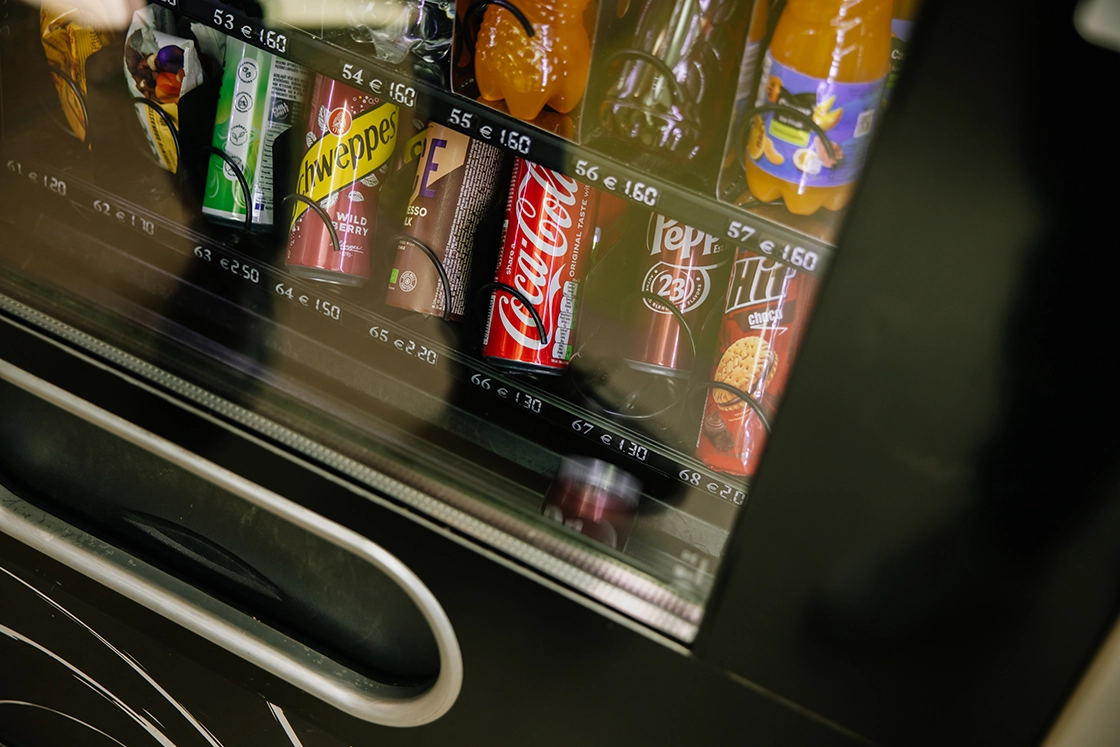
In short: To raise vending machine prices safely, raise one bestseller on one machine by about 5%, change nothing else for 14 days, and compare items sold – against the previous 14 days and against a similar machine you didn’t touch. If you lost fewer than about 4 in 100 buyers, keep the new price. If you lost more than about 14, change it back. The whole test costs you two slightly quieter weeks at most.
Ask an operator when they last raised prices, and you’ll often hear a year that starts with 202-something-uncomfortable. Coffee beans got more expensive. The same goes for vending products – snacks, drinks. Fuel, labor, rent – all up. The price on the machine? Frozen.
Why? Fear. “If I raise the price, people will stop buying.”
Here’s the thing: that fear is almost never tested. It’s just assumed. And every year you don’t test it, your profit per sale quietly shrinks – a price cut you never actually decided to make.
So let’s test it. Properly, safely, in two weeks.
How to run a vending machine price test in 14 days
The test, step by step
Five steps, nothing to guess.
Pick one machine, one bestseller
Not the fleet. Not every product. A product that sells a lot shows results fast — a slow seller would take months.
Raise it a little
€2.00 becomes €2.10. Five percent, just that one product. Remote price update: under a minute.
Wait 14 days. Change nothing else.
No new products, no rearranged trays, no promotions. Change three things and you’ll never know which one moved sales.
Compare items sold — two ways
Against the 14 days before. And against a similar machine you didn’t touch. If both dropped, it wasn’t your price — it was the weather or a holiday. The untouched machine is your lie detector.
Decide with numbers, not feelings
Lost fewer than 4 of 100 buyers? Keep the new price.
Did you know? In Vendon Cloud you can change prices remotely and schedule them in advance. Set the +€0.10 to go live on day 1 and the old price to return on day 15 – the test and its undo are both ready before you start. Keep the new price? Delete the second schedule. (How to schedule remote price changes in Vendon Cloud)
How to read the result: how many customers can you afford to lose?
After the raise, some customers might buy less. The question is: how many can you afford to lose before the raise stops paying?
Here’s the math in plain words. When you sell a coffee for €2.00, roughly €0.60 of it is your profit – the rest goes to ingredients, commissions, and costs. Raise the price to €2.10, and your profit per cup becomes €0.70.
That extra ten cents per cup is a cushion. Work it through, and it means: you’d have to lose about 14 out of every 100 buyers before the raise actually costs you money. Fourteen. Out of a hundred. For a ten-cent increase, real life almost never gets close to that.
So the scale looks like this:
- Sold 0–4% fewer items: almost nobody left. Keep the new price – every sale now earns you more.
- Sold 4–14% fewer: some customers left, but do the math – you’re still earning more in total than before. Usually keep it.
- Sold more than 14% fewer: too many walked away. Change the price back. If you can do it remotely, that’s a 30-second undo – which is exactly why this test is safe. The worst case isn’t a disaster; it’s two slightly quieter weeks and a lesson learned. And the lesson is useful: a flat raise isn’t the right tool for that location – so try one of the seven other ways to protect vending revenue when coffee costs keep climbing, like group pricing or employer co-pay.
One note: 14% is the tipping point for this example – a €2.00 coffee. Your numbers will differ, and the simple rule is: the more profit you make per item, the more buyers you can afford to lose
What vending operators discover when they raise prices
The most common result of this test is anticlimactic: sales barely move. Customers at a vending machine are buying convenience – the coffee is right there, at the moment they want it. Ten cents rarely changes that decision.
The second discovery is bigger: once the test works on one machine, you have a repeatable method. Next month, another product. Next quarter, another location. Pricing stops being a once-every-three-years act of courage and becomes a small, boring, regular habit – the way it should be.
Takeaway: how to raise vending prices safely
One machine, one bestseller, +€0.10
Two weeks, nothing else changes.
Compare items sold — against the past, and against a machine you didn’t touch.
Lost fewer than 4 of 100 buyers? Keep it. More than 14? Undo it in 30 seconds.
You’re not guessing the price anymore. You’re measuring it. And a measured price is one you never have to be afraid of.
Want to see how remote price change works in Vendon Cloud?
Schedule a demo with our team.