
 Vendon Cloud
 Use Cases
 Closed loop
 Engine systems
 Card readers
 Loyalty apps
 Cash systems
 About Coges
 Contacts
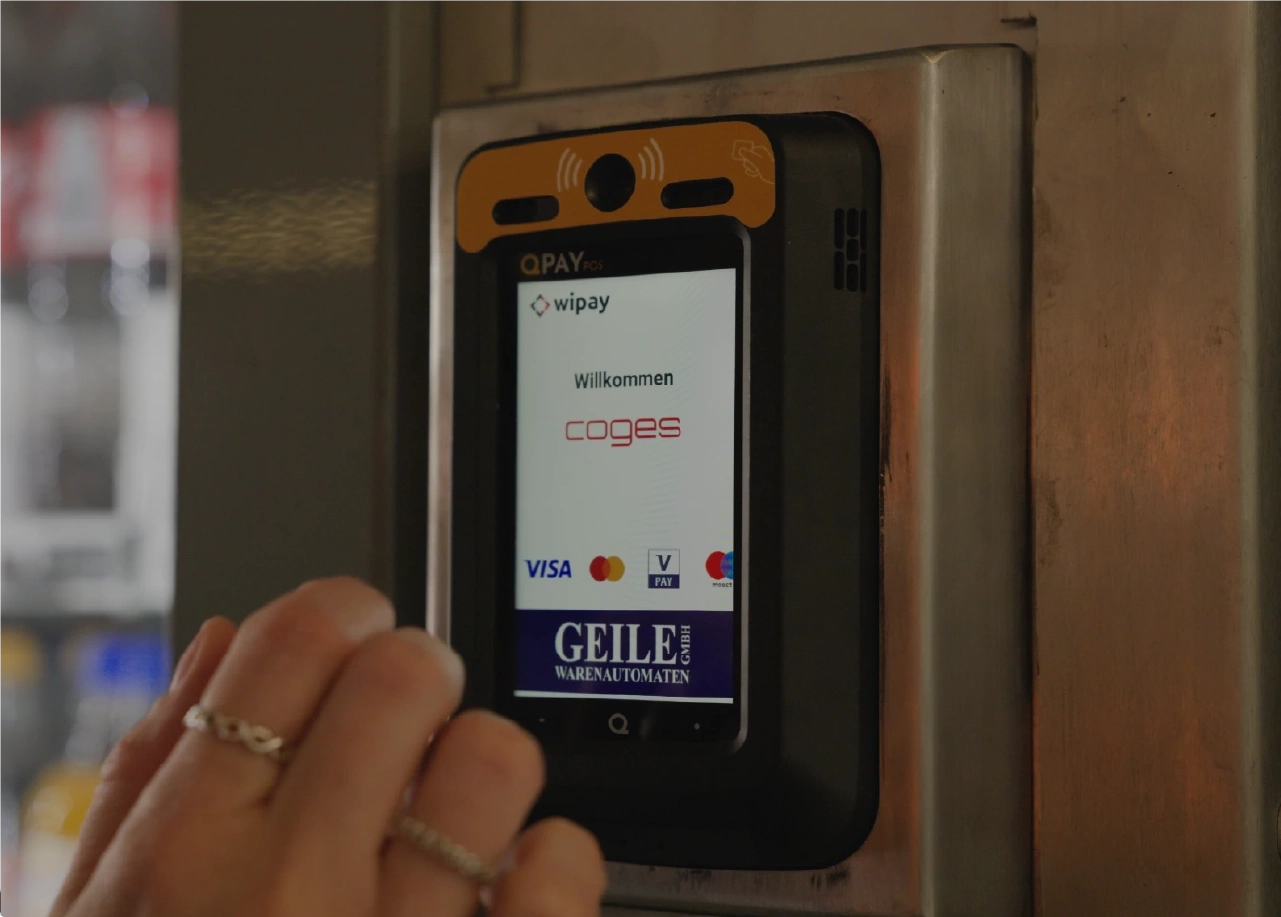
Geile Warenautomaten is installing Coges Qpay public cashless terminals in four-figure quantities across the vending machines it operates in Germany. The rollout follows a one-year test. The Westerkappeln operator has also moved its closed-loop payments to Coges MyKey and is investing in Coges cash systems at the same time. All of the payment data runs into Vendon Cloud alongside the machine telemetry.
How many Qpay terminals is Geile installing?
Qpay terminals are going into Geile machines in four-figure quantities. Geile tested the terminal for a year before committing to volume. Geile workshop manager Manuel Prütz fits them with support from Thomas Rydval, Aftersales Engineer Payment Technologies at Coges.
Qpay takes contactless, chip and PIN payments and mobile wallets including Apple Pay and Google Pay, with PIN-on-screen for higher-value purchases. It also supports MyKey and MIFARE closed-loop payments, so one terminal covers public and closed-loop users on the same machine. It is cloud connected, so prices and refunds are handled remotely.
Why did Geile Warenautomaten choose Coges for payments?
Managing Director Michael Geile points to Coges being part of the Azkoyen Group, which builds payment systems, vending machines and telemetry in-house.
“Decades of experience in vending-machine manufacturing clearly benefit the telemetry. All components are coordinated with one another. There are no compatibility problems, even with older models,” he told VendingSpiegel.
The Coges equipment also works with the last 100 Wurlitzer machines still in the Geile fleet.
Coges is a company that listens and delivers,” says Michael Geile.
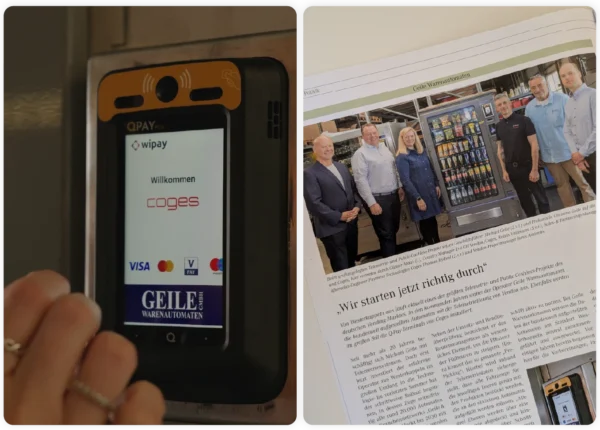
On the right: Printed issue of VendingSpiegel September 2026 magazine featuring the Geile Warenautomaten telemetry project.
Which Coges cash systems is Geile using?
Geile uses the Creos bill-validator, customised for the operator and now going into more machines. Creos reads the whole note with nine optical sensors and is built for hard conditions, which matters when machines sit in very different places.
Next comes Hexis LP, the new connected change-giver launching in autumn 2026. Geile will field test it on a larger scale. Hexis LP joins the Hexis change-giver line, with multi-frequency coin validation and a direct connection to MyKey, MIFARE and Pay4Vend. Geile worked with Günter Maas and Coges on developing the product for the German market.
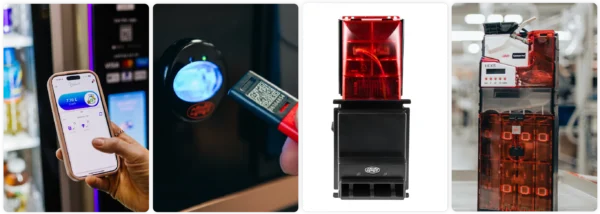
Coges and Geile expect interest in cash systems to pick up again once spending on telemetry and public cashless slows. “Although nowhere near the same scale as during the euro changeover,” says Günter Maas, Country Manager D-A-CH for Coges and Vendon.
What about transaction fees?
Fees come up in every cashless conversation. Michael Geile does not see them as a reason to avoid the technology. “If cashless systems are installed at the customer’s request, the operator can increase the sales prices. Additional services require additional fees,” he says. He sees the whole investment the same way: “It does create costs, but it is an investment in the future of the company.”
How do Coges payments work with Vendon Cloud?
Coges payment systems are built to run together with connectivity and telemetry, connected through Vendon Cloud. Transaction data and machine data sit in one place. Coges Nebular Cloud is now part of Vendon Cloud, so operators using Coges hardware keep the equipment they already have and get stock control, route planning and preventative maintenance in the same platform as their payment data.
For an operator rolling out public cashless while connecting its machines, that means no second system, no second login and no second set of numbers to check.
Closure
Geile Warenautomaten scaled up public cashless, moved its closed loop to Coges and kept investing in cash. All of it runs on one payment platform and one set of data. If you are reviewing your own payment stack, start with a simple question: what can your current cash, cashless and closed-loop systems not tell you?